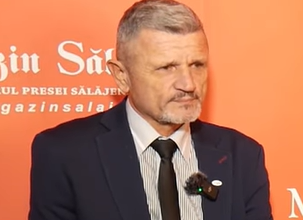
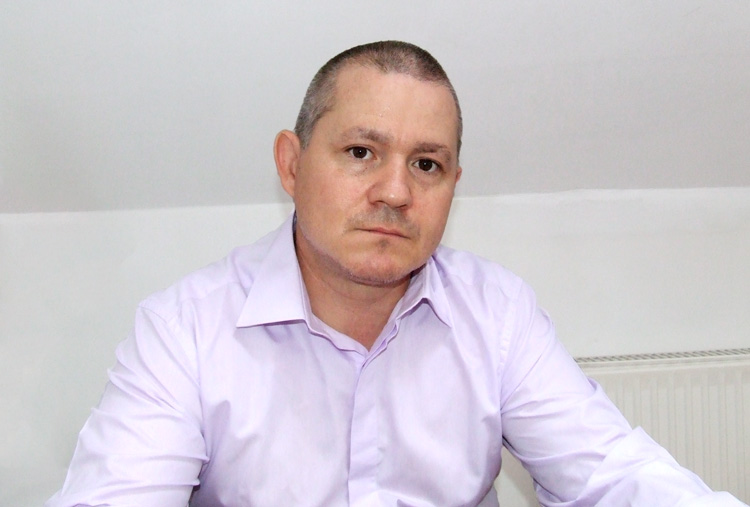
CIPRIAN DEMETER: The suspension of reason: great powers folded the maps of peace and drew the swords of revisionism

We are living, without fully realizing it, at ground zero of a new geopolitical era in the political history of humanity. For nearly eight decades, we have been lulled by a beautiful fairy tale, written in expensive ink at Yalta, Potsdam, Helsinki, and Paris. The fairy tale told us that the age of conquest had set, that borders are sacred, intangible, drawn definitively by the hand of history and sealed by the stamp of International Law. We fooled ourselves into believing that we had evolved from brutes fighting over territory into ”homo juridicus”, settling disputes in arbitration courts and air-conditioned boardrooms.
Today, this illusion is unraveling before our eyes, not with a whimper, but with a roar. Public International Law, that magnificent construct meant to protect the weak from the strong, has been suspended de facto. Not by an official decree, but through ignorance, defiance and the treads of tanks trampling over treaties as if they were dry grass. The Great Powers, those self-proclaimed guarantors of the world order, have unilaterally decided that maps are not engravings in stone, but sketches in the sand, to be redrawn at the whim of imperial ambition.




We are witnessing an anthropological regression. We are returning to the state of nature described by Hobbes, where ”auctoritas non veritas facit legem” (authority, not truth, makes the law). In this new context, international treaties become mere waste paper, read only by melancholic historians, while on the ground, reality is written in blood and fire. Expansion, considered a relic of the 19th century, has come back, wearing new clothes – ”special operations,” ”protection of minorities,” ”security zones” – but hiding the same old, hideous skeleton: the desire to master another’s land.
If we look honestly at our own continent, the idyllic image of a united Europe, that space of perpetual peace dreamed of by Kant, begins to crack. Under the veneer of institutions in Brussels and Strasbourg, under the rhetoric of solidarity and integration, Europe is, in reality, an active volcano, temporarily covered by a thin crust of prosperity.
Our continent sits on a powder keg of territorial grievances. There is, perhaps, not a single European nation that is fully reconciled with its current geography. The history of Europe is a history of territorial traumas, of amputations and forced attachments. The treaties of Trianon, Versailles, Saint-Germain or Ribbentrop-Molotov are not closed chapters; they are open, festering wounds, covered only by the thin bandage of ”political correctness” and membership in NATO or the EU.
Almost every country claims, in a whisper or increasingly loudly, territories from its neighbors. Hungary looks with painful nostalgia toward Transylvania and southern Slovakia. Poland carries within its collective subconscious the memory of the Kresy (the eastern territories). Germany, although pacified and re-educated, holds East Prussia and Silesia in the archives of its memory. The Balkans are a wrongly assembled puzzle, where every piece believes its place is actually across the border. Even in the West, separatist movements in Spain, Great Britain or Belgium show us that the ”nation-state” with fixed borders is an increasingly fragile convention.
The great powers, through their recent acts of expansion, have done nothing but signal that ”it is possible.” Pandora’s box has been opened. If you have military force, historical right (or invented right) prevails over international law. This suspension of the rules of the game has awakened the sleeping demons of European revisionism. The neighbor is no longer an alliance partner, but a potential usurper or, conversely, a legitimate target for the recovery of ”ancestral lands”.
What are international organizations doing in the face of this juridical cataclysm? The UN, the OSCE, the Council of Europe – these cathedrals of diplomacy – appear today more like mausoleums. They function out of inertia, producing resolutions that no one reads and condemnations that no one listens to. Membership in these select clubs no longer offers any guarantee of real security.
The veto power in the UN Security Council has transformed the organization into a paralyzed spectator. When the aggressor is one of those who wrote the rules and holds the nuclear button, justice becomes a sinister joke. We have reached the absurd situation where the presidency of security bodies is held by rotation even by states that most flagrantly violate global security. It is the absolute moral bankruptcy of the post-war architecture.
The tragedy lies in the fact that small and medium-sized nations, which placed all their hopes in the protection of this ”invisible shield” of international law, now find themselves naked before the storm. Article 5, bilateral treaties, security guarantees – all are, ultimately, words on paper. Their value is given only by the political will to respect them, and this will evaporates quickly when the interests of great powers dictate a new division of spheres of influence.
We are witnessing a ”privatization” of public international law. Each great power builds its own parallel legal system, its own moral justification for invasion and annexation. ”If they could do it in Kosovo, why can’t we do it in Crimea?” – here is the perverse logic that dynamites the world order. There is no longer a single standard, but a cacophony of claims and interpretations, where the only remaining arbiter is brute force.
Why this obsession with territory? In a digital, globalized world, where capital flows freely and ideas have no borders, why are we ready to kill and die for a strip of land? The answer is deeply rooted in our collective psychology and in modernity’s failure to offer us a meaning higher than ”blood and soil.”
Land is not just an economic resource; it is an extension of the national ego. When a nation loses territory, it feels the pain like a physical amputation, a ”phantom limb” syndrome that can last for centuries and Europe is full of such phantom limbs. The pain of territorial loss is transmitted genetically, from father to son, transforming into national mythology.
The suspension of public international law has reactivated this mythology. Populist politicians and authoritarian leaders have understood that nothing mobilizes the masses more effectively than the promise of ”reunification.” The map becomes a fetish, the border line becomes a scar that must be reopened to be healed and in the absence of a credible supranational arbiter, existential fear takes hold of nations. ”If we don’t take it, they will.” This security dilemma transforms neighbors into hereditary enemies and peace into a mere armistice between two wars.
We find ourselves in a moral void. We killed the old God of religion and now we have killed the new God of International Legality. In the absence of any transcendent authority – be it divine or juridical – political man returns to primal instincts. Expansion becomes proof of vitality and following the rules, a proof of weakness.
What we are living through is not just a geopolitical crisis, but a defeat of human civilization. We built libraries of law for centuries, trained generations of jurists and diplomats, built palaces of peace only to discover that at the first gust of history’s wind, all of these collapse like a house of cards.
The great powers have gone on an expansionist path, dragging the rest of the world behind them into a vortex of insecurity. Europe, the old lady who believed herself wise and healed of violence, is rediscovering the wrinkles of hatred and the scars of old battles. The powder of territorial grievances has been lit and the fuse burns slowly, but surely under the foundations of our houses.
Perhaps public international law has always been a fiction, a beautiful story we told each other so we could sleep at night. But it was a necessary fiction. Without it, we wake up naked in a jungle of concrete and steel, where the only law is the right of the strongest to devour the weakest.
In the end, when the dust settles over the burnt tanks and over the maps redrawn with the generals’ red marker, what will remain? Neither the glory of empires nor the satisfaction of historical revenge will remain. Only silence will remain.
The silence in the eyes of a child who does not understand why his house is now in a foreign country, even though he never moved. The silence of mothers weeping in different languages, but with the same tears, over graves dug in disputed lands that, in the end, receive everyone the same, regardless of nationality. The earth, for which we tear each other apart, will remain there, impassive and cold, covering our bones and our madness.
History will judge us not for the territories we conquered, but for the peace we killed. And perhaps, centuries from now, archaeologists of the future will unearth our peace treaties and wonder how a civilization capable of reaching the stars was incapable of sharing a piece of land without flooding it in blood. Until then, we lie in wait, hand on weapon and gaze fixed on the neighbor’s fence, in a world where justice has died and left us orphans of the law, alone in the face of our own cruelty.