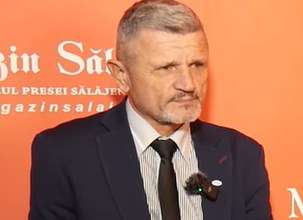
Ciprian Demeter: Red Winter: Europe at a crossroads between the geopolitical ambitions of Great Powers and the vulnerabilities of its own project


Today’s Europe finds itself at a historic turning point, a moment when the liberal order, painstakingly built from the ruins of the Second World War, appears to be wavering under the weight of new geopolitical pressures. The prolonged peace, long taken by many as a given, is proving to be a fragile construct, exposed to centrifugal forces that relentlessly undermine the cohesion of the continent. It is against this backdrop that the concept of “Europe on a Knife-Edge” ceases to be merely a metaphor, but an increasingly stark description of everyday reality.
In this complex landscape, external influences have moved beyond the realm of diplomatic observation and have become direct instruments of destabilisation, capable of altering the political trajectories of European nations. Tensions between the great powers, the United States and Russia, are casting an adverse shadow over our continent, turning Europe into a chessboard where the pieces are the Member States and the ultimate stake is the very democratic identity of our shared European space. No nation can remain insulated from these currents, as every fracture in Europe’s security architecture is immediately exploited.




Stability is being gradually eroded through mechanisms ranging from economic and political influence to disinformation campaigns and social infiltration, all of which contribute to weakening cohesion and amplifying internal vulnerabilities. This represents a structural transformation in the way Europe perceives its place in a multipolar world, extending far beyond the effects of a passing crisis. Recognising these dangers is the first necessary step towards developing a strategy for survival and reaffirming the values that have defined the European project over recent decades.
For more than seven decades, the transatlantic relationship has served as the foundation of European stability, providing the security umbrella that enabled unprecedented economic development. The United States has played a role extending well beyond commercial partnership, offering security guarantees through NATO and decisively shaping the geopolitical orientation of post-war Europe. This interdependence has been a driving force in preventing major conflicts, integrating European democracies into a global system shaped by Western values.
Nevertheless, this relationship is going through a period of uncertainty, marked by domestic political shifts in the United States and a growing desire in Washington to redefine its international commitments. Europe finds itself in the difficult position of having to recalibrate its expectations of its most important ally, recognising that its almost total dependence on American security has led to the atrophy of its own defence capabilities. This paradigm shift is compelling European states to seriously consider the prospect of genuine strategic autonomy.
The major challenge in the years ahead will be to preserve this vital alliance amid an increasingly polarised political climate, in which American national interests may come into conflict with the need for a united and resilient Europe. Rather than retreat or isolation, what is needed is a renegotiation of the terms of this partnership – one that acknowledges the new realities on the ground and prevents Europe from becoming collateral damage in domestic political disputes or shifts in strategic vision within the United States.
For the Russian Federation, Europe represents a historic and strategic sphere of influence that Moscow is seeking to reclaim through various means, ranging from energy pressure to the exploitation of frozen conflicts. Russia’s vision for the continent is centred on fragmenting Europe and weakening solidarity among its states, undermining cooperation and partnership in order to prevent the emergence of a unified European bloc capable of acting as an autonomous entity on the global stage. This strategy seeks to weaken European institutions from within by exploiting the political and economic vulnerabilities of Member States.
Dependence on Russian energy resources was, until recently, the primary instrument of coercion, used to create divisions between Eastern and Western European countries. Although efforts to diversify energy sources are underway, the legacy of existing infrastructure and trade relations remains a channel through which Russia retains influence over key sectors. Moreover, the use of indirect influence through traditional media and social networks has enabled the spread of narratives that challenge the legitimacy of Europe’s liberal democracy.
Beyond these overt mechanisms, Russia pursues a long-term strategy by infiltrating civil society structures and supporting anti-establishment movements, with the aim of generating chronic instability. This strategy of “hybrid warfare” is less concerned with achieving military victory than with undermining citizens’ trust in their own institutions and deepening divisions within national societies. It is a confrontation unfolding daily across political, cultural and informational spheres, with the ultimate objective of restoring Europe to a position of subordination or neutrality favourable to Moscow.
Russia’s financing of populist parties and movements across Europe represents one of the most subtle forms of political interference and a means of undermining the European project. By providing financial support to entities promoting Euroscepticism, extreme nationalism or anti-liberal rhetoric, Moscow encourages internal divisions while managing to introduce direct obstacles into European decision-making processes. These movements act as “Trojan horses”, turning legitimate public grievances into weapons against democratic institutions. Such funding is intended to intensify extreme social polarisation rather than promote a coherent ideology, ultimately obstructing any possibility of political consensus. By fuelling fears surrounding immigration, economic crises and the loss of national sovereignty, these parties succeed in mobilising large sections of the electorate while simultaneously delegitimising shared European values. Democracy itself is thus placed at risk, as its fundamental instruments – elections and freedom of expression – are exploited to undermine its very foundations.
The consequences of this phenomenon are evident in the weakening of democratic oversight mechanisms and the growing difficulty of adopting common policies at European Union level. When the interests of certain states or political parties become aligned with those of a hostile external actor, Europe’s ability to respond collectively to external challenges is severely diminished. This vulnerability is methodically exploited, creating a vicious cycle in which political instability breeds mistrust, which in turn fuels further populist movements.
The concept of “Red Winter” refers to a wave of large-scale social and political movements that could sweep across Europe this winter, fuelled by accumulated grievances, economic pressures and geopolitical tensions. The term describes the prospect of a period characterised by protests, collective mobilisation and challenges to government decisions, against a backdrop in which the rising cost of living, insecurity and declining trust in institutions are intensifying public frustration. “Red Winter” therefore suggests a period of heightened social tensions, during which economic grievances could evolve into broader movements with far-reaching consequences for Europe’s political equilibrium.
The impact of these developments could be considerable, as the scale of public mobilisation and the authorities’ ability to respond to citizens’ demands will influence the internal stability of European states. As discontent spreads and diverse social groups begin coordinating their actions, local protests may assume national or even transnational dimensions. At the same time, the growing gap between government priorities and public expectations risks deepening polarisation, creating opportunities for political actors seeking to exploit social tensions in order to consolidate their influence.
Furthermore, “Red Winter” could become a test of the resilience of democratic institutions and their ability to manage public dissent without unjustifiably restricting fundamental rights and freedoms. Faced with potentially large-scale protests, European governments will have to strike a balance between maintaining public order and upholding the rights to freedom of expression and peaceful assembly. The course of this period will depend on the scale of public grievances, the authorities’ response and the willingness of political actors to address underlying economic and social problems. In this context, “Red Winter” represents the prospect of a winter in which collective mobilisation could reshape the European political agenda and redefine the relationship between citizens and state institutions.
In France, the republican model of separating state and religion is facing unprecedented challenges, driven by the infiltration of radical religious factions seeking to destabilise the social order. These movements exploit shortcomings in integration processes and long-standing tensions in marginalised areas, creating enclaves in which republican values are openly challenged. The result is a breakdown in the social cohesion, manifested through recurring civil unrest and extreme polarisation of public debate.
The infiltration of these groups goes beyond an isolated phenomenon and is often supported or amplified by external influences with an interest in weakening a central European power. By instrumentalising religious identity, the aim is to create an irreconcilable rift between different segments of the population, making it almost impossible to manage social crises without resorting to force. This generates a widespread sense of insecurity, which in turn fuels far-right rhetoric, closing the vicious circle of radicalisation.
The implications for Europe are substantial, as France is one of the main pillars of the European project, and any chronic instability there directly undermines the European Union’s ability to act coherently. The French challenge extends far beyond public order and concerns the very definition of national identity, as well as the search for a balance between fundamental values in a diverse society. The success or failure of this endeavour will serve as a test for the entire continent as it confronts the identity-related challenges of the twenty-first century.
European institutions, established to ensure long-term stability and prosperity, are facing a crisis of relevance and effectiveness under the pressure of overlapping crises. Excessive bureaucracy, the lack of swift responses to geopolitical challenges and the perception that these institutions are increasingly detached from citizens’ everyday concerns have led to a gradual erosion of public trust in the common European project. This institutional weakness creates opportunities for external actors to influence decision-making processes and obstruct any initiative aimed at strengthening Europe’s collective power.
The erosion of stability extends beyond the political sphere and has taken on a structural dimension, as democratic procedures are frequently paralysed by the need to secure consensus among states with radically divergent perspectives. In this context, European institutions appear increasingly incapable of confronting hybrid threats or competing effectively in the global economy, losing ground to powers that act with greater force and strategic clarity. This inability fuels Eurosceptic rhetoric, transforming a vicious cycle of mistrust into a threat to the very survival of the European Union.
Institutional reform has therefore become an urgent necessity if Europe is to restore its ability to protect its interests and values. Without a more agile decision-making system and a clear vision of the future, European institutions risk becoming irrelevant in the face of emerging geopolitical realities. What is required is political courage capable of prioritising the consolidation of a resilient European structure, one equipped to address the challenges of the present century beyond the constraints of immediate national interests.
Europe is going through a critical moment, marked by vulnerabilities arising both from external pressures and from its own political, economic and institutional shortcomings. European identity, often perceived as something natural and permanent, is proving to be a construct that requires constant effort to sustain and defend. In the face of external interference, populism and radicalisation, the only path to survival lies in reaffirming the unity and fundamental values that have defined the European project since its inception.
European cooperation is an essential condition for strengthening the continent’s resilience against forces seeking its fragmentation and subordination, making it a strategic necessity. Simply preserving the status quo is no longer sufficient, as it is already being steadily eroded by hybrid attacks and geopolitical pressures. European states, together with their institutions, must develop a coherent strategy to address internal vulnerabilities and strengthen their defences against external manipulation.
Europe’s future depends on the ability of its citizens and leaders to grasp the scale of the threats and act in solidarity to defend freedom, dignity and shared values. The knife-edge on which we are walking must serve as a wake-up call, reminding us that solidarity is the only effective weapon in a century defined by uncertainty. Together, by reaffirming our common values and pursuing bold reforms, Europe can overcome this “Red Winter” and usher in a new chapter of stability and renewed purpose.